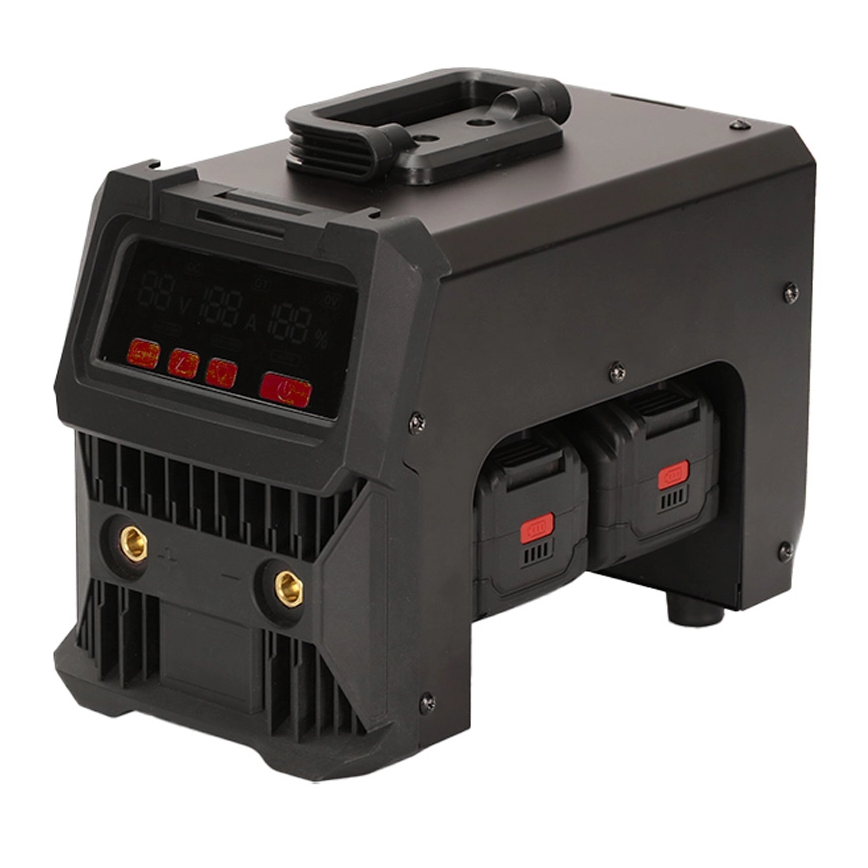
Job-site welding has historically been plagued by logistical nightmares. For decades, professional fabricators have dealt with the sheer frustration of dragging heavy extension cords across muddy, uneven terrain. When grid power is unavailable, the alternative usually involves relying on noisy, gas-guzzling engine-driven generators. These massive machines often require a dedicated truck bed just for transport. Finding a reliable 220V power source in remote agricultural fields or tight industrial spaces is frequently an impossible task. Consequently, this leads to inevitable project delays and inflated labor costs.
Advanced battery technology has finally provided a definitive solution to these enduring challenges. A cable-free inverter system severs the tie to the electrical grid entirely. By eliminating the need for combustible fuels and cumbersome leads, these devices offer unprecedented geographical freedom. Maintenance crews, pipefitters, and dedicated fabrication enthusiasts can now operate efficiently without being tethered to a wall outlet.
Looking at recent shifts in the global construction sector, the trajectory is clear. Stringent noise ordinances in urban centers and a universal push toward job-site decarbonization are rapidly accelerating the adoption of heavy-duty battery tools. Industry analysts note that as lithium-ion energy density improves year over year, battery-powered fabrication is transitioning from a niche workaround to the industry standard for commercial contractors. The demand for emission-free, highly mobile equipment is reshaping how project managers calculate operational efficiency and safety.
This comprehensive guide will break down exactly how battery-powered welders function and objectively analyze their true power output. We will also compare them directly to traditional setups. By understanding the underlying engineering, you can determine if investing in a portable welding unit is the right practical choice for your specific daily demands.
Key Takeaways
Ultimate Portability: Untethered units completely eliminate the need for long extension cords and bulky generators. This allows for true off-grid, remote, and highly mobile welding operations.
Impressive Output: Modern lithium-ion battery technology enables these compact machines to deliver high, stable amperage. They easily handle standard Stick, TIG, and select wire-feed tasks.
Zero Emissions and Noise: Unlike traditional engine-driven welders, battery-powered units produce absolutely no hazardous exhaust fumes and operate silently. They are the safest, most compliant choice for indoor and confined-space environments.
Cost-Efficiency: While the initial upfront investment in high-capacity batteries is notable, cordless models save substantial money long-term. They eliminate volatile fuel costs and drastically reduce mechanical maintenance.
Ecosystem Compatibility: Many top-tier units utilize modular battery systems. This adds incredible versatility to your existing job-site tool kit by sharing power sources with standard drills and grinders.
What is a Cordless Welding Machine and How Does It Work?
A battery-powered welder is a highly portable, self-contained inverter machine. Instead of relying on a traditional AC wall outlet or a gasoline-powered engine, it draws its electrical current from high-capacity rechargeable batteries. By utilizing advanced internal electronics, these compact devices convert direct current from the battery packs into the precise voltage and amperage required to melt metal and form a structural weld.
The Shift to Advanced Lithium-Ion Technology
Early attempts at off-grid welding relied on heavy lead-acid batteries. Those proved entirely impractical for mobile use due to their massive weight and rapid voltage drop. The true evolution occurred with the integration of advanced lithium-ion cell technology. Modern lithium-ion cells boast exceptionally high discharge rates. This rapid energy delivery ensures that a high-quality Cordless Welding Machine can instantly provide the high amperage necessary to initiate the arc. It sustains a smooth, spatter-free puddle that directly mirrors the performance of premium grid-tied machines.
Key Components of a Battery-Powered Welder
The internal architecture of these units is a marvel of modern engineering. They rely on three primary systems to function safely and efficiently under heavy load.
The Battery Pack: This is the core energy reservoir. It consists of high-density lithium-ion cells managed by a sophisticated Battery Management System. This system actively monitors internal temperatures and voltage levels to prevent cell damage.
The Smart Inverter Board: Serving as the brain of the machine, it utilizes Insulated-Gate Bipolar Transistors to step down the voltage and step up the current to optimal welding levels.
The Cooling System: High-efficiency, variable-speed fans and aluminum heat sinks work continuously. They dissipate the intense thermal energy generated by the inverter board during heavy use.
Battery Power and Performance Metrics Explained
Understanding battery specifications is crucial for evaluating how long and how hard a high-quality unit can operate under real-world conditions. Industry standards dictate that overall performance is heavily tied to the energy capacity and the thermal management software of the machine.
Battery Capacity and Run Time
Battery capacity is measured in Amp-Hours, which indicates the total amount of electrical charge the unit can store. In practical fabrication terms, run time is typically measured by the number of electrodes you can consume on a single charge, rather than continuous minutes of operation. For instance, a heavy-duty 24 Amp-Hour battery configuration might allow an operator to burn between 15 to 30 standard 3/32-inch or 1/8-inch electrodes before requiring a recharge. Naturally, this exact number fluctuates based on the amperage setting, ambient temperature, and the arc length maintained by the operator.
Charging Speed and Swap-and-Go Systems
Downtime is the absolute enemy of job-site productivity. Furthermore, to combat battery depletion, modern off-grid welders utilize rapid-charging stations equipped with active cooling fans. These chargers can safely replenish heavy-duty lithium cells in under two hours. Machines that feature modular battery systems offer a massive operational advantage. By keeping a secondary set of batteries on the charger, operators can simply swap depleted packs for fresh ones. This ensures a continuous, uninterrupted workflow without waiting for a single integrated unit to charge.
Understanding Duty Cycle on Battery Power
Duty cycle represents the percentage of a 10-minute period that a machine can weld continuously at a specific amperage before it must cool down. On a battery-powered unit, the duty cycle is heavily monitored by internal thermal overload protection software. As the battery depletes, the machine intelligently manages the output to prevent thermal runaway. This protects the sensitive lithium-ion cells from permanent degradation. While the thermal duty cycle might be slightly lower than a plugged-in industrial machine, it is more than sufficient for the intermittent nature of field repairs.
Welding Output: Can a Cordless Welder Handle Heavy-Duty Jobs?
The most common skepticism among traditional fabricators is whether a battery-powered unit possesses the raw, unyielding strength required for industrial tasks. Can it actually handle structural steel? The empirical data, backed by countless field tests, suggests that they are highly capable within their designated operational parameters.
Maximum Amperage and Material Thickness
Most professional-grade models deliver a maximum output ranging from 130 to 150 amps, with some premium units pushing even higher. At 140 amps, a skilled operator can comfortably achieve full penetration on 1/4-inch mild steel in a single pass. For thicker materials, multiple passes combined with proper joint preparation allow these compact machines to tackle surprisingly heavy structural brackets, pipe fencing, and heavy equipment repairs.
Supported Welding Processes
Specifically, when tackling diverse materials, a modern Cordless Welding Machine supports several distinct processes highly valued by field engineers.
Stick Welding: Shielded Metal Arc Welding is the primary application for untethered units. The advanced inverters provide an incredibly stable DC arc, preventing the electrode from sticking to the puddle. This makes it ideal for running 6010, 6011, 6013, and 7018 rods in harsh outdoor environments.
TIG Welding: DC Lift-TIG works exceptionally well on battery power. Because TIG typically requires lower amperage for precision work on thin gauge stainless or mild steel, the battery life is significantly extended. This makes it perfect for sanitary pipe repairs or custom automotive fabrication.
Flux-Cored Welding: While historically rare due to the power draw of internal wire-feed motors, emerging technology now supports compact spool gun integrations. This allows for rapid flux-cored welding without shielding gas in remote, windy locations.
Cordless Welding Machines vs. Traditional Setups
To make an informed purchasing decision, it is essential to compare battery-powered technology directly against established traditional methods. The table below highlights the core differences that impact daily job-site operations.
Dedicated fabrication shops with reliable 220V power.
Heavy-duty structural sites with no grid access.
Long-Term Cost Analysis
While the upfront acquisition cost of a battery-powered welder is often higher than a basic plug-in inverter, the long-term return on investment is highly compelling. By completely eliminating daily gasoline expenses, oil changes, and routine engine maintenance, a battery-powered unit frequently pays for its premium within the first year of heavy commercial use.
Top Job-Site Applications for Battery-Powered Welders
The true value of an off-grid welder becomes instantly apparent in specific pain-point scenarios where traditional equipment simply fails to deliver.
Remote and Off-Grid Repairs
Agricultural workers frequently face catastrophic equipment breakdowns in the middle of expansive, muddy fields. Off-road enthusiasts require immediate trail-side fixes for snapped axles or cracked suspension components. Pipeline inspectors often need to perform structural touch-ups in dense forests where towing a massive generator is logistically impossible. In these remote scenarios, pulling a highly capable Cordless Welding Machine out of the trunk and striking an arc within seconds is invaluable.
High-Elevation and Tight-Space Welding
Dragging 100 feet of heavy, copper welding lead up a ladder is a severe safety hazard. Because they are lightweight and highly portable, battery units equipped with padded shoulder straps allow operators to safely climb scaffolding. Engineers can easily access elevated catwalks or perform structural steel repairs near the ceiling of a facility. Their compact footprint means they can be maneuvered through narrow industrial corridors or standard utility manholes without hassle.
Indoor and Confined Space Safety
Welding inside commercial buildings, residential basements, or the dimly lit hulls of ships presents strict safety challenges. Operating a gas-powered generator in these enclosed environments is strictly prohibited, as carbon monoxide poisoning can be rapidly fatal. In contrast, battery-powered welders eliminate this deadly hazard entirely, allowing for safe, fume-free power generation indoors.
How to Choose the Right Equipment (Buyer’s Guide)
Selecting the correct machine requires a careful assessment of your daily tasks and existing tool infrastructure. Instead of looking at abstract features, consider the following practical engineering standards before investing.
Assess Amperage Needs Based on Material
Begin by matching the machine maximum output to your most frequent applications. If your daily work primarily involves repairing thin sheet metal, exhaust pipes, or auto body panels, a lower amperage unit will suffice. Conversely, if you regularly weld 1/4-inch steel plates or heavy pipe, you must prioritize a machine capable of sustaining 140 to 150 amps. Ensure you purchase the highest capacity batteries available to maintain a practical duty cycle under these heavy loads.
Evaluate the Battery Ecosystem
The battery architecture is arguably the most critical factor of your purchase. Determine whether the machine uses a proprietary built-in battery or a modular system. A built-in battery means the entire machine is out of commission during charging. Modular systems that accept standard power tool batteries offer superior flexibility. Selecting a unit that integrates seamlessly with your existing tool ecosystem ensures you have the necessary power output while cross-utilizing batteries with your impact drivers and angle grinders.
Verify Ingress Protection and Build Quality
Job sites are unforgiving, chaotic environments. Look for machines encased in rugged, drop-resistant polymer housings with internal shock absorption for the sensitive inverter board. Additionally, verify the Ingress Protection rating. A higher rating ensures the internal electronics and battery contact points are adequately protected against conductive metallic dust and light job-site moisture.
Maintenance and Safety Tips for Lithium-Ion Welders
While they require significantly less mechanical upkeep than gas generators, battery-powered welders demand specific care to protect the lithium-ion cells and ensure long-term reliability.
Battery Care for Maximum Longevity
Lithium-ion batteries degrade much faster if subjected to extreme conditions. Avoid deep discharges; make it a habit to swap the battery before it drops below ten percent capacity. Temperature control is equally vital. Store your batteries in a climate-controlled environment when not in use. Leaving lithium-ion cells in a freezing work truck overnight, or baking inside a hot storage container, will temporarily degrade their performance and permanently damage the cell chemistry over time.
Safe Operation on the Job Site
Standard fabrication safety protocols remain mandatory. This includes the use of auto-darkening helmets, heavy leather gloves, and fire-resistant clothing. However, operators must also practice battery-specific safety. Ensure that the plastic battery casings and ventilation ports are shielded from direct exposure to flying sparks, hot slag, and excessive grinding dust. Never place a freshly welded, glowing piece of metal near the battery ports, as extreme localized heat can melt the housing and create a severe fire hazard.
Conclusion
A battery-powered welder is no longer a futuristic gimmick; it is a highly efficient, proven tool for modern professionals and serious fabrication engineers today. It provides zero emissions, silent operation, and true portability for remote field jobs where traditional power simply cannot reach. If geographical convenience, operator safety, and long-term cost savings are top priorities for your workflow, battery power is undoubtedly the answer. We highly recommend exploring modern product specifications and considering a reliable Cordless Welding Machine like the HWM401 series to upgrade your daily welding arsenal and embrace the cable-free future.
Frequently Asked Questions
How long does a battery last on a cordless welding machine?
The operational run time depends heavily on your specific amperage setting and the total battery capacity. Generally, you can expect to burn anywhere from 15 to 30 standard electrodes on a fully charged, heavy-duty battery system before needing to swap the batteries or initiate a recharge.
Can a cordless welding machine weld aluminum?
Yes, it is possible, provided the machine is equipped with the correct technology. If the unit supports a spool gun for MIG welding, or if it is a specialized AC/DC TIG unit, you can successfully weld aluminum. However, most standard DC battery stick and TIG welders on the market are best suited for mild steel and stainless steel applications.
Are battery-powered welders safe to use outdoors?
Yes. Most high-quality units are engineered with rugged, weather-resistant casings designed to withstand harsh job-site conditions. However, like any sophisticated electrical tool, the battery connection ports and internal inverters should be actively protected from direct, heavy rain and extreme moisture to prevent short circuits.
Can I use my regular power tool batteries on a cordless welder?
This depends entirely on the specific model. Some innovative welders are specifically designed to run in series using standard 18V, 20V, or 40V power tool batteries, allowing you to use your existing inventory. Other industrial models utilize a proprietary, high-capacity internal battery pack designed exclusively to handle the massive current draw of the welding arc.
Is a cordless welder better than a 110V plug-in welder?
For portability and off-grid use, it is absolutely superior. A high-quality battery unit often provides a much more stable, higher-amperage arc than a standard 110V residential wall outlet can support without tripping a circuit breaker. This makes battery power significantly better for remote, heavy-duty fabrication tasks where 110V power simply lacks the necessary punch.
Can a battery-powered welder run a 7018 rod?
Absolutely. Modern battery-powered inverters are designed to provide a highly stable DC arc that is perfect for running low-hydrogen 7018 rods. Depending on the rod diameter, you simply dial in the required amperage, and the machine's rapid energy delivery will easily maintain the puddle for structural repairs.
How much does a cordless welder typically weigh?
One of the biggest advantages of these machines is their minimal weight. Most professional models weigh between 20 to 40 pounds, including the batteries. This lightweight footprint allows operators to easily carry the unit over their shoulder using a strap, making it ideal for ladder work and tight spaces.