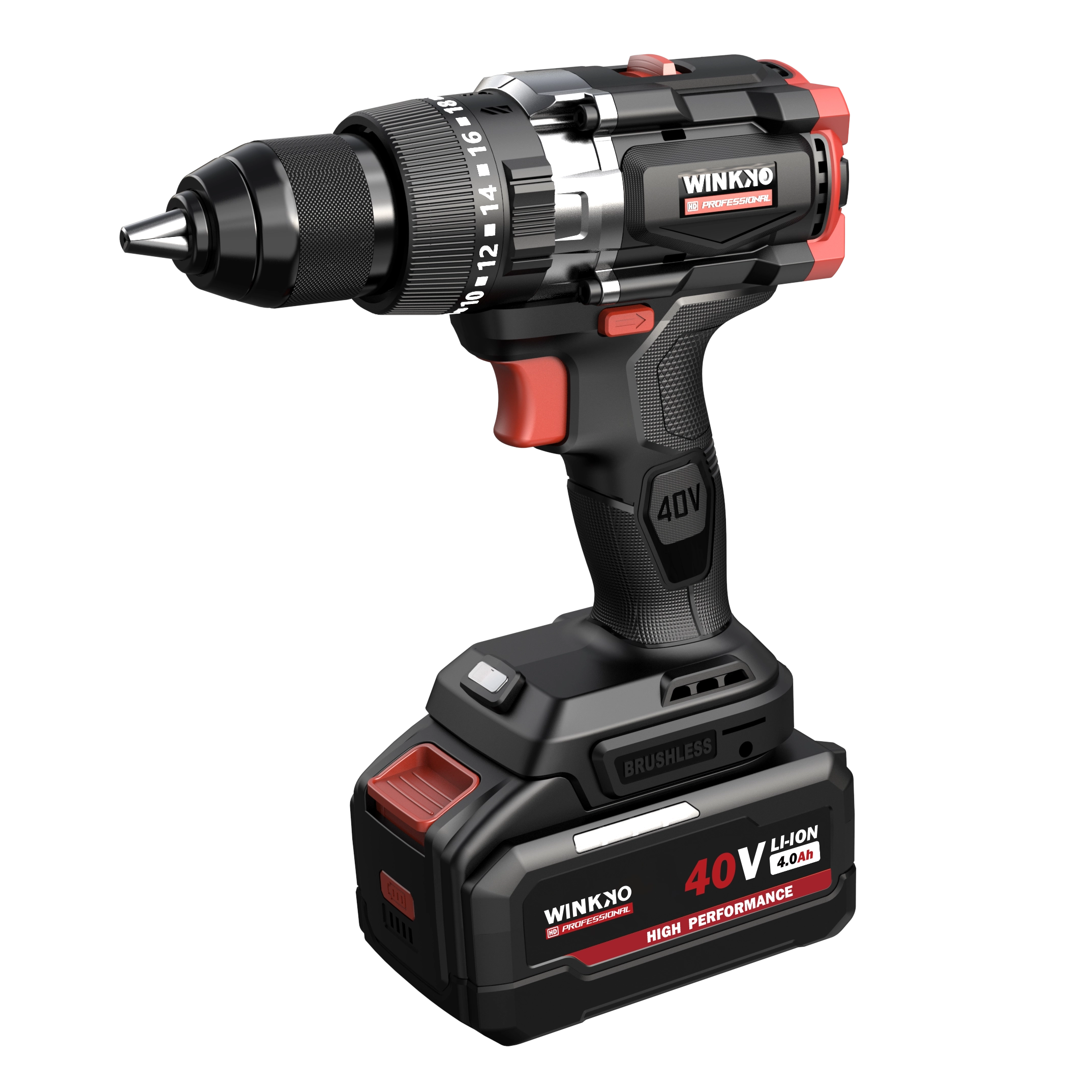
Walking into a hardware store can feel like stepping into a labyrinth of steel and circuitry. You are immediately met with rows of power tools, each claiming to be the ultimate solution for your projects. Choosing the right device is more than just picking a brand off the shelf; it is about finding a tool that balances power, weight, and reliability to become the backbone of your workshop. A well-selected Cordless Drill will make the difference between an enjoyable afternoon of building and a frustrating day of stalled progress.
Investing in the wrong equipment leads to a cycle of wasted resources. If your tool lacks sufficient torque, tasks become tedious and inconsistent. Conversely, over-investing in heavy-duty gear you do not need leads to unnecessary user fatigue. By understanding technical specifications like voltage, motor efficiency, and torque management, you can make a purchase that serves you for years. We will examine how a high-quality Cordless Drill, such as those utilizing advanced engineering, can streamline your workflow and elevate the quality of your finished work.
Core Considerations for Your Toolkit
Voltage Matching: 12V units handle light tasks with ease, while 18V/20V platforms are the gold standard for versatility and heavy-duty performance.
Brushless Technology: Opting for a brushless motor significantly extends battery life and reduces internal maintenance.
Platform Investment: Buying a tool means buying into a battery ecosystem; choose a brand with a broad range of compatible devices.
Tool Functionality: Know the distinction between a drill for precision and an impact driver for high-torque fastening.
Chuck Versatility: A 1/2-inch chuck is essential for handling larger, more demanding bit shanks.
Understanding the Cordless Drill Driver
At its core, this device is a precision instrument designed for boring holes and driving fasteners across various mediums. While early battery-powered models were often dismissed for their lack of stamina, modern lithium-ion technology has changed the landscape entirely. You now get the mobility to work anywhere without the constraints of a power cord or the performance drop-off of older chemistries.
When you hold a drill, you are holding a complex assembly of mechanical systems. The chuck serves as the primary interface, gripping your bits with either a keyed or keyless mechanism. Behind that sits the clutch—a critical component that allows you to dial in torque settings so you do not strip screw heads or damage soft materials like pine or plastic. Furthermore, the motor and variable-speed trigger work in tandem to provide the control needed for delicate tasks, while the battery serves as the lifeblood of the operation.
Choosing a reliable Cordless Drill represents the first step for any homeowner or DIY enthusiast. Whether you are installing cabinets, building a custom deck, or simply tightening loose hardware, this tool acts as your primary assistant. It eliminates the manual strain of repetitive tasks and allows you to focus on the craftsmanship of your build rather than the labor of driving screws.
Drill Drivers vs. Impact Drivers
One of the most common points of confusion for those assembling a workshop is distinguishing between a drill and an impact driver. They may share similar battery platforms and grips, but their internal mechanics are built for entirely different objectives. A standard drill is designed for smooth, consistent rotation, which is vital when you need precision and control, such as drilling a pilot hole or driving a delicate screw into furniture.
In contrast, an impact driver uses a concussive force known as rotational striking. When the motor senses high resistance, an internal hammer hits an anvil to generate rapid, short pulses of torque. This action is incredibly efficient at driving long, thick fasteners into dense wood like oak or pressure-treated lumber. Many experienced users opt for a combo kit, which provides both tools. This setup allows you to switch between the precision of a drill and the raw driving power of an impact tool, significantly reducing the physical effort required for complex projects.
Evaluating Performance Specs
Voltage is often the first spec people look at, and for good reason. It correlates to the overall capability of the motor. A 12V unit is perfectly adequate for tight, awkward spaces where weight is a factor, but 18V/20V systems are the industry workhorses. They provide the headroom needed for demanding jobs without straining the motor.
Beyond voltage, the chuck size is a limiting factor for your project scope. A 3/8-inch chuck limits you to smaller bits, which can be restrictive if you plan on doing more than light assembly. Moving up to a 1/2-inch chuck, as found on premium models, expands your options to include large hole saws, paddle bits, and specialized masonry tools. Additionally, torque management through the clutch is what prevents a job from turning into a repair task; the ability to mechanically stop the drive is what protects your material from damage.
The industry is currently seeing a definitive shift toward smart electronics. Modern tools are increasingly utilizing microprocessors to manage current flow and prevent overheating, which is a major departure from the crude designs of the past. As battery density increases, manufacturers are focusing less on raw voltage wars and more on efficient energy delivery and thermal management, ensuring your tool stays cool even under heavy loads.
The Evolution of Motor Technology
For decades, brushed motors were the standard. They function by using physical carbon brushes that press against a spinning commutator to create an electrical connection. While these are cost-effective to produce, they are inherently inefficient. The friction between the brushes and the motor housing generates heat, which is simply wasted energy. This heat eventually leads to degradation of the internal components.
Brushless motors represent a paradigm shift in power tool longevity. By replacing physical brushes with an electronic circuit board, the motor delivers power directly to the magnetic field. This eliminates the friction-based heat loss entirely. The benefits are felt immediately: your tool runs cooler, your battery lasts significantly longer, and the motor housing can be designed to be much more compact. Investing in a brushless Cordless Drill is not just about the upfront cost; it is about owning a machine that avoids the premature failure associated with traditional brushed mechanics.
The Battery Ecosystem Strategy
The cost of modern tools is heavily concentrated in the battery. It is essential to treat your tool purchase as an entry into a system. Because batteries are expensive, sticking to one brand allows you to buy bare tools later, which significantly lowers your long-term costs. If your primary task is light maintenance, a 2.0Ah battery provides a great balance of weight and endurance. For heavy-duty framing or professional use, a 4.0Ah or higher battery ensures you are not constantly swapping packs during your workday.
Always review a manufacturer’s wider catalog before committing to their platform. You want a brand that offers a diverse range of products—from reciprocating saws to circular saws and lighting—all powered by the same battery interface. This level of system compatibility is what separates a collection of random, incompatible gadgets from a professional-grade workshop setup.
Common Pitfalls and Expert Tips
Avoiding the temptation to buy low-tier, no-name tools is perhaps the best piece of advice for a beginner. Cheap tools often suffer from loose chuck tolerances, plastic gear trains, and poor battery management that can cause fire hazards or sudden failure. A quality tool provides tactile feedback, consistent power, and most importantly, reliability when you are mid-project.
Another common mistake involves using the wrong tool for the task. If you are drilling into masonry or concrete, standard drilling rotation will simply destroy your bit and potentially burn out your drill. You must use a tool with a dedicated hammer mechanism. This function provides a rapid, forward-pounding motion that pulverizes the stone while the drill turns. Ensuring you have the right tool for the material is the hallmark of someone who respects both their equipment and the project at hand.
What is the best voltage for a home cordless drill?
For the vast majority of homeowners and hobbyists, an 18V or 20V platform is the ideal choice. It strikes the perfect balance between power for structural tasks and portability for general household maintenance. While 12V models are excellent for specialized, low-clearance work, 18V/20V systems are versatile enough to handle nearly anything you will encounter in a typical home project.
Can a standard cordless drill go through concrete?
Standard drills are intended for wood, metal, and plastic. Trying to drill into concrete or brick with a non-hammer drill will cause the motor to overheat and the bit to become useless. If your project involves masonry, ensure you are using a drill with a hammer mode and a proper carbide-tipped masonry bit.
Are cordless drills better than corded ones?
For almost everyone, yes. The convenience of not dealing with cords, extensions, and tripping hazards is immense. Unless you are in a professional environment that requires 24/7 continuous operation under extreme stress, modern lithium-ion cordless technology has rendered corded tools unnecessary for standard home and shop usage.
How long do cordless drill batteries last?
With proper care, a modern lithium-ion battery will last several years. Avoid exposing your packs to extreme temperatures, such as leaving them in a hot truck or a freezing shed. Storing them in a cool, dry place and avoiding full depletion will help maintain their health over long-term use.
What does the "driver" in cordless drill driver mean?
The term indicates that the tool is equipped with an adjustable clutch, allowing it to act as a precision screwdriver. By setting the clutch, you can control the output torque, ensuring that screws are driven flush to the surface without damaging the wood or snapping the screw head off, which is essential for furniture assembly and finish carpentry.
Choosing the right tool is a long-term commitment to your productivity. By prioritizing brushless technology, a compatible battery system, and the right power class, you build a foundation that supports all your future endeavors. If you are ready to upgrade your workspace, exploring premium Cordless Drill options is the best way to ensure professional results that you can be proud of for years to come.