The construction and renovation industries rely heavily on specialized power tools to achieve precision and efficiency. Among these, the hammer drill and the rotary hammer stand out as indispensable assets for professionals and DIY enthusiasts alike. Whether you are anchoring a bookshelf into a basement wall or undertaking heavy-duty demolition on a commercial site, understanding the scope of your equipment is vital. A hammer drill is specifically engineered to bridge the gap between a standard driver and a high-impact demolition tool, providing the necessary force to penetrate tough substrates.
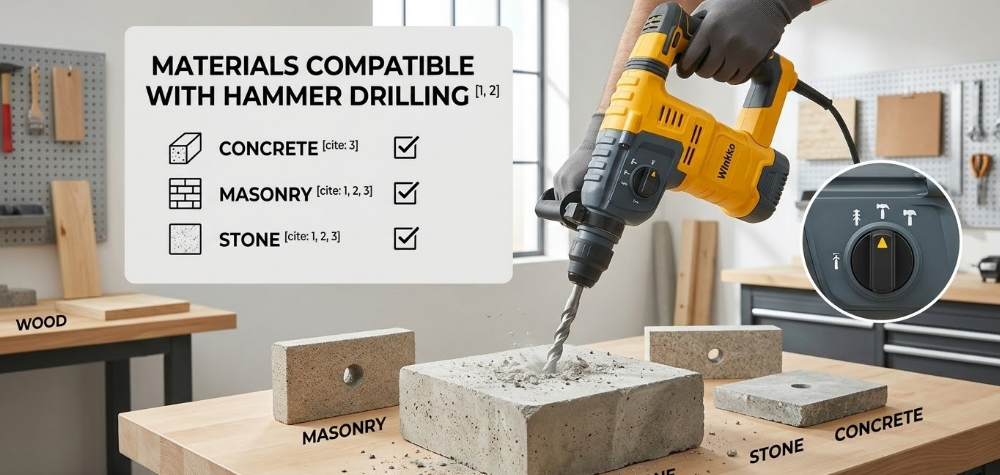
A hammer drill is primarily designed to drill into hard, brittle materials such as concrete, brick, mortar, stone, and masonry by combining rotational force with a rapid pulsing "hammer" action. While it can be used on wood and metal by disabling the hammer function, its specialized impact mechanism is specifically optimized for aggregate-based materials where a standard drill would fail.
Choosing the right tool for the job is not just about power; it is about the physics of the material you are working with. Using a standard drill on concrete will likely burn out the motor or ruin the bit, while using a rotary hammer drill on delicate tile without the proper settings could shatter the workpiece. This comprehensive guide will explore the various materials compatible with these tools, the internal mechanisms that make them effective, and how to select the best approach for your specific project needs.
Table of Contents
Hammer Drill and Its Working Mechanisms
Different Types of Hammer Drills
What Makes a Hammer Drill Different From a Regular Drill?
Using a Hammer Drill on Concrete
Using a Hammer Drill in Masonry
Using a Hammer Drill in Wood
Using a Hammer Drill on Metal
Using a Hammer Drill in Ceramics
Tips for Using Hammer Drills
Inappropriate Materials for Hammer Drilling
Conclusion
FAQs
Hammer Drill and Its Working Mechanisms
A hammer drill works by utilizing a specialized internal mechanism—typically two ribbed clutch plates—that creates a rapid, percussive pounding action while the drill bit rotates. This "hammering" effect mimics a miniature jackhammer, pulverizing the material at the tip of the bit so the rotating flutes can whisk away the dust.
The internal design of a standard hammer drill relies on the "rachet-style" mechanism. As the chuck rotates, these plates ride over one another. Each time a "bump" on one plate passes a "bump" on the other, the entire chuck is pushed forward and then pulled back. This happens thousands of times per minute, measured as Beats Per Minute (BPM) or Impacts Per Minute (IPM). This vibration is what allows the carbide-tipped masonry bit to chip away at dense surfaces.
In contrast, a heavy-duty rotary hammer uses a pneumatic piston mechanism. A crankshaft drives a piston that compresses air to fire a striker against the bit. This delivers a much higher level of impact energy, measured in Joules. For large-scale construction, the rotary hammer drill is the preferred choice because the piston mechanism is significantly more durable and powerful than the friction-based clutch of a standard hammer drill.
Understanding these mechanics is essential for tool longevity. Because the standard hammer drill relies on physical plates clicking against each other, excessive pressure from the user can actually hinder the tool. The mechanism needs room to "bounce" to be effective. Conversely, the rotary hammer does the work for you, requiring only a steady hand to guide the bit into the substrate.
Different Types of Hammer Drills
Hammer drills are generally categorized into three main types based on their power source and internal impact mechanism: cordless hammer drills, corded hammer drills, and dedicated rotary hammers. Each type serves a specific niche, ranging from light household tasks to heavy industrial drilling and chipping.
Cordless hammer drills are the most common for residential work. Powered by high-voltage lithium-ion batteries, they offer the convenience of portability. Modern brushless motors in these units provide impressive torque, making them suitable for drilling holes up to 1/2 inch in masonry. However, for continuous work on thick concrete, the battery may drain quickly, and the impact energy is lower than corded versions.
Corded hammer drills provide a consistent power supply, which is necessary for long-duration tasks. Since they don't rely on a battery, they can maintain a higher BPM consistently. They are often lighter than cordless models because they lack a heavy battery pack, reducing user fatigue during overhead applications. These are excellent for medium-duty masonry work where an electrical outlet is readily available.
The rotary hammer represents the pinnacle of this tool category. Unlike the standard hammer drill, it utilizes an SDS (Slotted Drive System) chuck. This allows the bit to slide back and forth independently of the chuck, maximizing the transfer of energy from the pneumatic piston to the material. A rotary hammer drill is the go-to for drilling large diameter holes, core drilling, or even light demolition when switched to "hammer-only" mode.
| Feature | Standard Hammer Drill | Rotary Hammer |
| Mechanism | Ratchet/Clutch | Pneumatic Piston |
| Impact Energy | Low (measured in BPM) | High (measured in Joules) |
| Chuck Type | Keyed or Keyless | SDS-Plus or SDS-Max |
| Primary Use | Light Masonry / DIY | Heavy Concrete / Professional |
| Weight | 4-8 lbs | 10-20+ lbs |
What Makes a Hammer Drill Different From a Regular Drill?
The primary difference lies in the impact function; while a regular drill only provides rotational force to cut through material, a hammer drill adds a high-speed percussive strike that breaks down brittle aggregates. This allows the tool to handle materials like stone and concrete that would simply dull the bit of a standard drill.
A standard drill-driver is designed for materials that can be "cut" or "shaved," such as wood, plastic, or metal. The bits used are typically twist bits with sharp edges. When these bits encounter concrete, the heat generated by friction without any "impact" to break the stone causes the metal to soften and fail. The hammer drill solves this by hammering the material first, turning the stone into dust that the rotation can then remove.
Furthermore, the chuck systems differ significantly. Regular drills use a three-jaw chuck to grip smooth-shank bits. While some hammer drills use this same system, a professional rotary hammer uses an SDS system. The SDS bits have grooves that lock into the chuck while allowing the bit to move freely forward and backward. This prevents the bit from slipping under high-impact loads, a common issue when using a standard drill on hard surfaces.
From a user experience perspective, the rotary hammer drill feels much "thumper" and more aggressive. Most hammer drills feature a toggle switch that allows the user to turn the hammer function off. This effectively turns the tool into a regular drill, making it a versatile "two-in-one" tool for those who don't want to carry multiple pieces of equipment.
Using a Hammer Drill on Concrete
Using a hammer drill on concrete is one of its primary functions, as the tool's impact mechanism is specifically designed to fracture the aggregate and cement paste found in concrete slabs and walls. For successful penetration, one must use a carbide-tipped masonry bit and allow the tool's BPM to do the heavy lifting.
Concrete is an exceptionally dense material composed of cement and various aggregates like crushed stone or gravel. When drilling into it, a standard drill bit would quickly overheat. The rotary hammer provides the necessary Joules of energy to crack these stones. When working with cured, high-PSI concrete (common in foundations), a rotary hammer drill with an SDS bit is significantly faster and safer than a standard hammer drill.
When drilling into concrete, dust management is crucial. The hammering action creates a fine silica dust that can be hazardous if inhaled. Many modern professionals use vacuum attachments or "hollow bits" that suck the dust out as it is created. It is also important to occasionally pull the bit out of the hole while it is still spinning to clear the "spoils" (dust), which prevents the bit from binding.
For those using a cordless rotary hammer, it is important to monitor the heat of the battery and the motor. Drilling into concrete requires a massive amount of energy. Using a high-amp-hour (Ah) battery will not only provide longer runtime but often allows the motor to draw more current for better performance. Always ensure the "hammer" icon is selected on the tool's mode collar before beginning.
Using a Hammer Drill in Masonry
Hammer drills are the gold standard for masonry work, including drilling into brick, mortar, cinder block, and stone. Because masonry materials are often more porous or brittle than solid concrete, a hammer drill provides a perfect balance of speed and impact without the risk of cracking the entire block.
When working with brick, it is often debated whether to drill into the brick itself or the mortar joint. Mortar is softer and easier to drill but provides less holding power for anchors. If you are mounting something heavy, drilling into the center of the brick with a rotary hammer drill is preferred. The hammer action should be used at a moderate speed to prevent the back of the brick from "spalling" or blowing out as the bit exits the material.
Cinder blocks (CMUs) present a unique challenge because they are hollow. A rotary hammer can easily punch through the outer shell. In these cases, it is vital to use the correct type of anchor, such as a toggle bolt or a specialized masonry screw. The hammer function is essential here because the aggregate in the block wall can be quite hard, even if the wall itself is thin.
Brick: Use medium speed; avoid drilling too close to edges.
Mortar: Use low speed; hammer function may not be strictly necessary but speeds up the process.
Stone: Requires high impact; a rotary hammer is best for natural granite or fieldstone.
Cinder Block: Be careful of the hollow core; use the hammer setting to get through the hard shell quickly.
Using a Hammer Drill in Wood
A hammer drill can be used to drill wood, but only if the hammer function is turned off, as the percussive action would splinter the wood fibers and create a messy, inaccurate hole. Once switched to "drill-only" mode, the tool functions like a high-torque standard drill.
Wood is a fibrous material that needs to be cut, not pulverized. Using a rotary hammer on the hammer setting in wood would result in the bit jumping around and potentially splitting the board. However, because hammer drills and rotary hammer drills usually have high-torque motors, they are actually excellent for driving large wood auger bits or spade bits through thick timber or joists.
If you are a professional contractor, having a rotary hammer drill that features a "drill-only" mode is incredibly convenient. It allows you to switch from drilling a pilot hole in a concrete foundation to bolting a wooden sill plate to it using the same tool. You simply swap the SDS masonry bit for an SDS-to-standard-chuck adapter or use a wood-specific SDS bit.
When drilling wood with these tools, be mindful of the weight. Hammer drills are heavier than standard drill-drivers. This extra mass can be an advantage when drilling large holes downward, as the weight of the tool helps feed the bit into the wood. However, for delicate woodworking or cabinetry, a smaller, lighter drill is usually preferred for better control and to avoid marring the wood surface.
Using a Hammer Drill on Metal
A hammer drill is effective for drilling metal when set to "drill-only" mode and paired with a High-Speed Steel (HSS) or Cobalt drill bit. The hammer action must be disabled because the vibration would likely break the brittle metal-cutting bit and prevent the cutting edge from engaging the surface correctly.
Metal requires a consistent, sharp cutting edge and often a slower rotational speed to prevent overheating. If you were to use the hammer function of a rotary hammer on a steel plate, the bit would bounce off the surface rather than "biting" into it. This would lead to "work hardening," where the heat from the friction makes the metal even harder to drill.
For heavy metal applications, the high torque of a rotary hammer drill can be a major benefit. When using large-diameter hole saws or step bits on thick steel, the powerful motor ensures the tool doesn't stall. It is highly recommended to use a cutting fluid or lubricant to keep the bit cool and extend its life.
In the B2B and industrial sectors, versatility is key. A technician might use a rotary hammer to drill through a concrete floor and then switch modes to drill through a metal support beam. As long as the user remembers to toggle the switch, the hammer drill serves as a rugged, multi-purpose power tool capable of handling the toughest metal fabrication tasks on-site.
Using a Hammer Drill in Ceramics
Hammer drills can be used on ceramic tiles or surfaces only with extreme caution, usually by starting in "drill-only" mode with a specialized diamond or carbide tipped tile bit to score the glaze before potentially using very light hammer action on the substrate below. Most professionals avoid using the hammer function on the ceramic itself to prevent cracking the brittle material.
Ceramics and porcelain are notorious for being fragile. The high-frequency vibration of a rotary hammer will almost certainly cause a crack to spiderweb across the tile. The correct procedure involves using a specialized "spear-point" tile bit or a diamond hole saw. You must drill through the tile layer using the rotation-only setting and plenty of water for cooling.
Once the bit has passed through the ceramic tile and reached the concrete or backer board behind it, you can carefully switch the tool to hammer mode. However, many experts suggest continuing in "drill-only" mode if the substrate allows, or using a very light-duty hammer drill rather than a heavy rotary hammer drill to minimize the risk of vibration-induced damage to the tile's bond with the wall.
| Material | Hammer Mode? | Bit Type | Speed |
| Ceramic Tile | No | Diamond/Spear-point | Low |
| Porcelain | No | Diamond Core | Low |
| Glass | No | Diamond/Spear-point | Very Low |
| Backer Board | Yes (Light) | Masonry | Medium |
Tips for Using Hammer Drills
To get the most out of your hammer drill or rotary hammer, always use the correct bit for the material, maintain steady but not excessive pressure, and clear dust frequently from the hole. Proper technique not only speeds up the work but also protects the motor and extends the life of your expensive masonry bits.
One of the most common mistakes is pushing too hard. In a standard hammer drill, the internal plates need to click and bounce; if you lean your entire body weight into it, you dampen the vibration and create heat instead of impact. With a rotary hammer, the piston does the work. You only need to apply enough pressure to keep the bit engaged with the surface. If the tool starts to bounce wildly, you are likely hitting a piece of rebar or very hard aggregate.
Speed control is another vital tip. While it’s tempting to pull the trigger all the way, starting the hole at a lower speed helps prevent the bit from "walking" across a smooth surface. Once a pilot divot is established, you can increase the RPM. For deep holes, use a "pecking" motion—pulling the bit out every inch or so to allow the flutes to eject the dust. This prevents the bit from getting stuck or "seizing" in the hole.
Finally, always check your settings. It is easy to forget the tool is in "hammer-only" or "drill-only" mode. Before you pull the trigger, verify that the selector switch matches your material. For instance, using a rotary hammer drill on concrete requires the "hammer and rotation" setting. If you accidentally leave it on "hammer-only," the bit will just pound against the stone without spinning, which won't result in a hole and can damage the tool's internal gears.
Inappropriate Materials for Hammer Drilling
Hammer drills should never be used on extremely fragile or flexible materials such as glass, thin plastics, or tempered steel, as the percussive force will cause immediate shattering or catastrophic failure. Additionally, using the hammer function on soft wood or drywall is counterproductive and will result in oversized, jagged holes.
Glass is the most obvious "no-go" for a rotary hammer. Even on the lightest setting, the impact will shatter the pane instantly. If you must drill glass, use a specialized glass bit and a standard drill at very low speeds with a lubricant like oil or water. Similarly, thin plastics will often crack or melt under the combined heat and vibration of a hammer drill.
Tempered steel or high-carbon tool steels are also inappropriate. The hammer action of a rotary hammer drill is designed to break brittle stone, not to penetrate hardened metal. Attempting to hammer-drill into a hardened steel plate will likely result in the carbide tip of your bit shattering, as carbide is very hard but quite brittle.
Glass: Will shatter instantly.
Plexiglass/Thin Plastic: Will crack or melt.
Drywall: The hammer action will blow out a large, messy hole in the gypsum core.
Finished Cabinetry: The vibration can mar the finish and loosen joined parts.
Conclusion
The rotary hammer and its smaller sibling, the hammer drill, are essential tools that have revolutionized how we interact with the built environment. By understanding that these tools are designed for brittle, hard materials like concrete and masonry, you can unlock their full potential while avoiding costly mistakes on wood, metal, or ceramics. Whether you choose a mechanical hammer drill for light household tasks or a pneumatic rotary hammer drill for industrial construction, the key lies in matching the tool's mechanism to the material's properties. Always prioritize safety, use the correct bits, and let the tool's internal engineering do the heavy lifting for you.


