Whether you are assembling flat-pack furniture, hanging a heavy picture frame, or tackling a weekend home renovation project, a reliable power tool is an absolute household necessity. Imagine this: you are balancing on a step stool, trying to fix a wobbly cabinet door, but instead of driving the screw flush, the bit slips and shreds the metal head. Experience shows that many beginners feel intimidated by power tools, often struggling with stripped screws, misaligned holes, or simply choosing the incorrect settings. These common frustrations can quickly lead to material damage and project delays.
The solution lies in understanding the mechanics of your equipment. A high-quality Cordless Drill serves as the ultimate, versatile small tool for both residential and commercial applications. Market data highlights a significant shift toward ultra-compact, high-efficiency devices. As urban living spaces shrink and the DIY movement surges, professionals and homeowners alike demand tools that deliver serious power without traditional bulk. Mastering this compact gear allows you to achieve professional-level results without relying on expensive contractors.
Key Takeaways
Understanding the basic anatomy—the chuck, clutch, and trigger—is the critical first step toward safe and effective operation.
Mastering torque and speed settings prevents mechanical damage to your materials and drill bits.
Selecting the correct drill bit based on material density is structurally crucial for achieving a clean, precise hole.
Utilizing simple accessories, such as a portable guide, can instantly rectify common alignment issues.
Investing in a device equipped with a brushless motor ensures long-term durability, consistent power output, and thermal efficiency.
The Anatomy of a Compact Power Driver
To operate a tool safely, you must first speak its language. Breaking down the complex parts into standardized, approachable terms helps build mechanical confidence and reduces user error.
The Chuck and Jaws
The chuck is the mechanical clamp at the front designed to hold the bit. Most modern compact tools feature a keyless chuck, allowing you to tighten the grip by hand. Inside, three metal jaws converge to secure the accessory. To lock it, insert the shank, hold the base of the chuck, and twist the outer sleeve clockwise until you hear a clear ratcheting click. That sound is your confirmation of maximum retention.
The Clutch and Torque Selector
Torque is essentially the rotational force or "twisting power." The clutch is the numbered ring behind the chuck. Its primary job is to disengage the motor when a specific resistance is reached. By adjusting this ring, you prevent the tool from over-driving screws or snapping off fastener heads.
The Gear Switch and Motor Control
Located on the top housing, the gear selector switch, labeled 1 and 2, controls internal planetary gears. Gear 1 provides low speed but high torque, which is the optimal setting for driving heavy screws into dense materials. Gear 2 delivers high speed with lower torque, perfect for boring clean holes quickly.
Directional Control and Battery Interface
Above the trigger rests the directional switch. Setting this to the center position acts as a mechanical safety lock, disabling the tool entirely. Powering the unit, the lithium-ion battery pack slides into the handle base and clicks into the terminal contacts. Proper battery seating is essential for consistent electrical flow and long-term tool health.
Essential Settings for Precision Drilling
Configuring your gear before you pull the trigger is a fundamental requirement for success. Incorrect settings are the primary cause of ruined projects.
Calibrating Torque for Your Material
A standard rule of thumb is to begin on the lowest numerical setting when working with softwoods. Drive the fastener slowly; if the clutch clicks before the screw is flush, incrementally increase the torque. You will often notice a drill bit icon on the dial, which locks the clutch entirely to provide maximum power for boring holes.
Managing Speed with Control
A common mistake is pulling the trigger to its maximum position immediately. Most modern tools feature a variable speed trigger that regulates revolutions per minute based on your finger pressure. A slow, controlled start is essential for accuracy, while steady pressure can be applied once the hole is established. Mastering this nuance gives you complete command over the Cordless Drill.
Standard Operating Procedures for Safety
Safety protocols are not merely suggestions. Always tie back loose hair, avoid baggy clothing, and wear ANSI-certified safety glasses. Ensure the bit is perfectly centered to prevent wobbling, and always secure small workpieces to your workbench with clamps to prevent them from spinning uncontrollably.
Choosing the Right Bit for the Job
The effectiveness of your tool depends heavily on the accessory attached to it. Using the wrong bit geometry increases friction, generates heat, and raises the risk of material damage.
Wood and Metal Geometry
Wood drilling requires specific flute designs. Twist bits are the standard for general carpentry, while brad-point bits feature a sharp center spur for pinpoint accuracy. When drilling into dense metal, you need hardened steel—often coated in titanium—to withstand thermal stress. Always apply a few drops of cutting fluid to manage heat when working with metal.
Screwdriving Profiles
Fastener bits must mate perfectly with the screw head. Whether using Phillips, Torx, or square-drive bits, a loose fit results in cam-out. This is a mechanical failure where the bit slips out of the screw head, effectively stripping the metal and ruining the fastener.
Advanced Techniques for Clean Results
Executing a perfect hole requires a systematic approach that protects your material's structural integrity.
Marking and Pilot Holes
Precision begins long before you engage the motor. Use a center punch to create a small indentation, which prevents the tip from "skating" across slick surfaces. For larger projects, drilling a shallow pilot hole with a smaller bit provides a guide for your final fastener, ensuring total accuracy.
Body Stance and Alignment
Ergonomics play a vital role in output quality. Keep your feet shoulder-width apart for a solid center of gravity. Position your forearm in a straight line with the motor axis to ensure you apply axial pressure directly into the substrate. This prevents the bit from bending or snapping under side-loading.
Effective Break-Through
As you approach the exit side of your material, physical resistance decreases. Ease off the forward pressure to prevent the wood from splintering. Keep the motor running as you slowly reverse the bit out, which helps clear away dust and debris efficiently.
Identifying High-Quality Features
When selecting your next tool, understanding technical specifications is key to an objective purchase. Modern advancements have significantly improved the power-to-weight ratio of Cordless Drill models.
Brushless vs. Brushed Motors
The industry is moving rapidly toward brushless motor technology. Unlike traditional brushed motors that rely on physical contact and create friction, brushless motors use electronic boards to coordinate energy delivery. This results in higher efficiency, less heat, and significantly longer battery runtimes, making them the superior choice for modern DIYers.
Product Recommendation
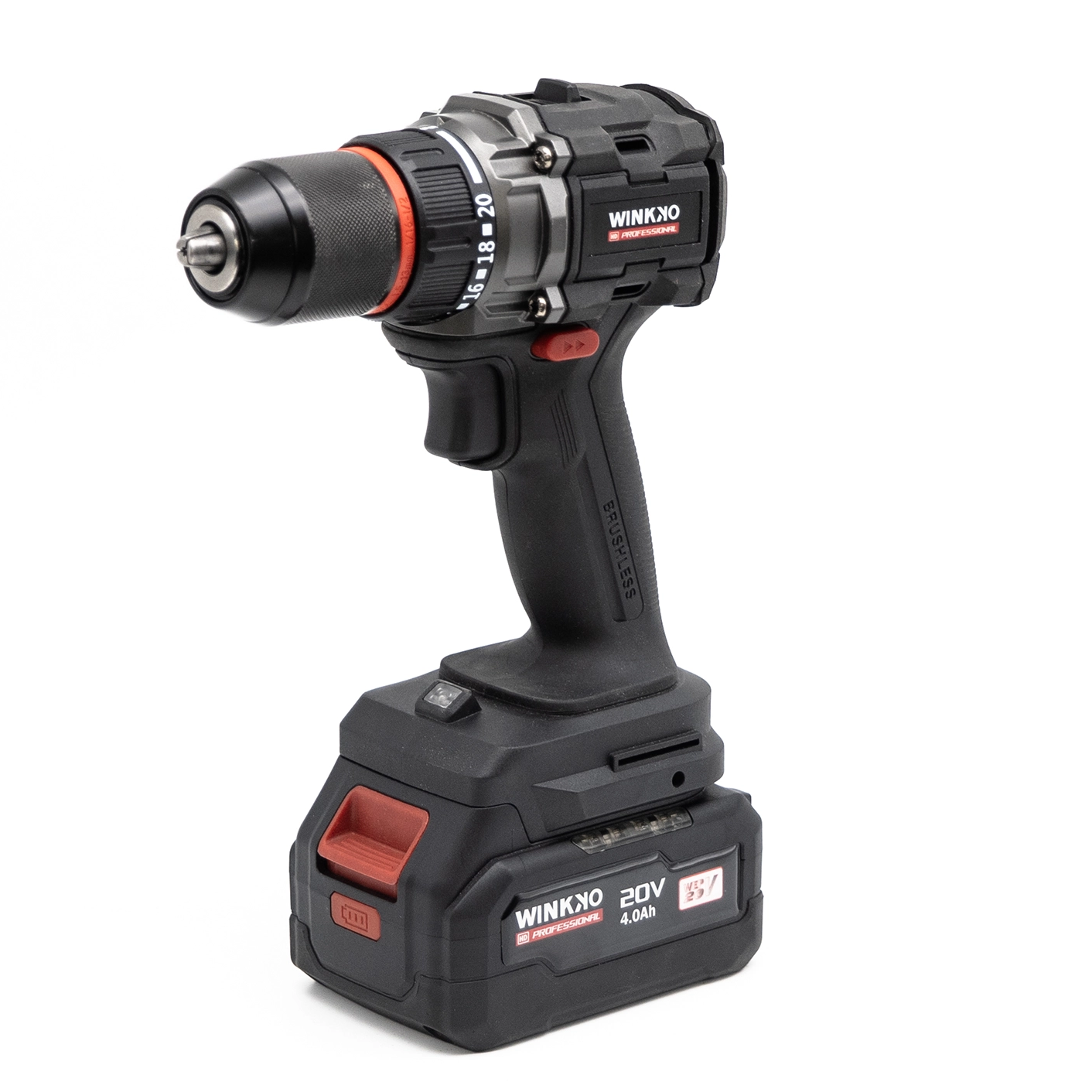
For those seeking a blend of power and ergonomics, the Winkko HCD207BL Cordless Drill stands out as a reliable solution. Its high-efficiency brushless motor provides the sustained power required for both home projects and professional tasks. With its compact footprint and precise torque control, it is engineered to reduce fatigue while navigating tight spaces, allowing you to focus on the work rather than fighting your equipment.
Conclusion
Effective drilling is a skill built on understanding your tool's settings, choosing proper accessories, and maintaining good physical technique. Confidence will grow as you practice on scrap material. Once you have a feel for the balance and speed control, you will find that these tools are capable of much more than simple repairs. We encourage you to explore the Winkko HCD207BL for your next project.
Can a standard drill penetrate concrete?
A standard unit can handle light masonry, such as soft brick or mortar, when using a carbide-tipped bit. However, for dense concrete, a dedicated hammer drill—which adds a pulsing, percussive action—is necessary to prevent motor burnout.
How do I determine the right torque setting?
Start on a low setting between 1 and 3 for soft materials. Test-drive a screw; if the clutch clicks before the screw is flush, increase the setting incrementally. The goal is a perfect flush finish without over-driving the head.
What distinguishes a drill from an impact driver?
A drill provides smooth, continuous rotation, ideal for holes and standard screws. An impact driver delivers rapid, high-torque strikes, which are vastly superior for driving long lag bolts or heavy fasteners without damaging the bit or screw.
Why does my bit loosen during use?
Bit slippage usually stems from an insufficiently tightened chuck. Ensure the keyless chuck is ratcheted firmly before starting. Additionally, avoid running the tool in reverse while under heavy load, as this can naturally loosen the internal jaw tension.
What is the best way to extend battery life?
Lithium-ion batteries are sensitive to extreme temperatures. Avoid leaving them in hot vehicles or freezing environments. For the longest service life, charge the batteries before they reach zero percent and store them at roughly 50 percent capacity when not in use for extended periods.