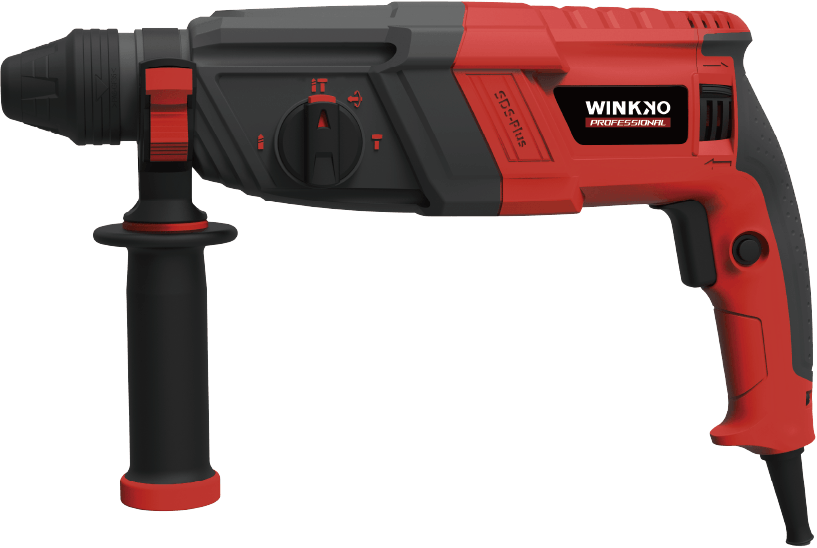
When it comes to heavy duty construction and masonry work, selecting the right power tool is the difference between a job well done and a ruined workpiece. Professionals and DIY enthusiasts alike often find themselves standing in the tool aisle debating the merits of a rotary hammer versus a hammer drill. Both tools are designed to penetrate hard materials like concrete, brick, and stone, yet they utilize vastly different mechanical principles to achieve their goals. Understanding the specific engineering behind a rotary hammer and a hammer drill is essential for optimizing productivity on the job site.
The choice between a rotary hammer and a hammer drill depends entirely on the scale of your project and the hardness of the material. A hammer drill is best for light masonry work, such as drilling small holes in mortar or brick, while a rotary hammer is the superior choice for heavy duty concrete drilling, demolition, and chiseling due to its powerful internal piston mechanism. For holes larger than half an inch or for sustained work in aged concrete, the rotary hammer is the industry standard.
In the following sections, we will provide a comprehensive breakdown of these two essential power tools. We will explore their internal mechanisms, typical applications, and the key differences that set them apart in terms of power, speed, and comfort. Whether you are mounting a shelf on a brick wall or anchoring heavy machinery into a reinforced concrete slab, this guide will help you determine which tool belongs in your arsenal.
Table of Contents
What is a Rotary Hammer?
What are Rotary Hammers used for?
What is a Hammer Drill?
What are Hammer Drills used for?
The Differences Between Rotary Hammer vs. Hammer Drill
How to Choose Between A Rotary Hammer or Hammer Drill
What is a Rotary Hammer?
A rotary hammer is a heavy duty power tool specifically engineered for high impact drilling and chiseling into hard materials like concrete and stone, utilizing a sophisticated pneumatic piston mechanism to deliver massive striking force.
Unlike standard drills, a rotary hammer uses a "pneumatic" hammering action. Inside the tool, a piston is driven by a crankshaft, compressing air to move a striker that hits the back of the drill bit. This design generates significantly more impact energy than a standard hammer drill, allowing the user to bore through thick concrete with much less physical effort. Because the energy is generated internally by air pressure rather than the user's muscle power, it is the most efficient tool for structural masonry work.
Modern rotary hammer drill units often feature multiple modes of operation, including rotation only, hammering with rotation, and hammering only. This versatility is further enhanced by the use of specialized chucks, such as the SDS Plus or SDS Max systems. These "Slotted Drive System" chucks allow the bit to slide back and forth independently of the chuck's rotation, maximizing the impact force delivered to the work surface without the bit slipping.
When using a rotary hammer, the tool does most of the work. For professionals, this means reduced fatigue and faster hole completion. In the context of industrial construction, where hundreds of anchor holes might be required in a single day, the efficiency of a rotary hammer is indispensable. It is the powerhouse of the masonry world, designed to handle the toughest environments where a standard hammer drill would simply overheat or fail to penetrate.
What are Rotary Hammers used for?
Rotary hammers are primarily used for drilling large diameter holes in reinforced concrete, performing light demolition tasks like removing tile or old mortar, and installing heavy duty anchors in structural masonry.
Because a rotary hammer possesses a "hammer only" mode, it is frequently used as a mini jackhammer. Professionals use wide chisels to peel up floor tiles, bull point bits to break through concrete walls, and scaling tools to remove rust or weld spatter from metal surfaces. The high impact energy of a rotary hammer drill makes it the go-to choice for electrical and plumbing contractors who need to run conduit or piping through foundation walls.
In the realm of structural engineering, a rotary hammer is required for setting large diameter mechanical or chemical anchors. These anchors often require deep, precise holes in high PSI concrete. The pneumatic action ensures that the hole is drilled quickly and cleanly, which is vital for the integrity of the anchor. Without the power of a rotary hammer, drilling a one inch diameter hole into cured concrete would be an exhausting and time consuming process.
Furthermore, these tools are essential for landscaping and masonry restoration. Whether you are drilling holes for rebar to connect a new concrete slab to an old one or breaking up decorative stone, the rotary hammer provides the necessary torque and impact. Its ability to switch between rotation and percussion allows it to adapt to various material densities, making it a staple on any serious construction site.
What is a Hammer Drill?
A hammer drill is a versatile dual purpose tool that functions as a regular drill for wood and metal but includes a mechanical "hammering" feature where two ribbed discs click past each other to create rapid, high frequency vibrations for drilling into masonry.
The internal design of a hammer drill is much simpler than that of a rotary hammer. It relies on two notched plates that ride against one another. As the drill spins, the notches cause the plates to rise and fall, creating a "pulsing" or "hammering" effect. This action is much faster in terms of beats per minute compared to a rotary hammer, but the individual impact force is much lower. The efficiency of a hammer drill depends heavily on how much pressure the user applies to the tool.
While a rotary hammer drill is a specialized tool, a hammer drill is often seen as a generalist. Most models allow the user to turn off the hammering function entirely, turning the device into a high torque driver for wood or metal. This makes it a popular choice for homeowners or maintenance workers who only occasionally need to drill into brick or mortar but otherwise spend their time on standard assembly and construction tasks.
The chuck on a hammer drill is usually a standard three jaw keyed or keyless chuck. This allows it to accept standard round or hex shank bits. While this is convenient for switching between wood and masonry bits, it is less effective for heavy masonry work because the bits are held by friction and can occasionally slip under high stress. Despite these limitations, the hammer drill remains an essential, compact tool for light duty masonry applications where a larger rotary hammer would be overkill.
What are Hammer Drills used for?
Hammer drills are ideally suited for light masonry tasks such as drilling small holes in brick, block, or mortar for the purpose of hanging shutters, mounting electrical boxes, or installing lightweight shelving.
If your project involves drilling holes that are 1/4 inch to 3/8 inch in diameter, a hammer drill is often the most efficient choice. It is lighter and more maneuverable than a rotary hammer, making it perfect for working on ladders or in tight spaces. For example, a homeowner looking to install a security camera on a brick exterior would find a hammer drill more than capable of handling the task without the added bulk and cost of a professional grade rotary hammer drill.
In the commercial world, hammer drills are frequently used by HVAC technicians and electricians for light fastening. When mounting brackets to concrete blocks (which are hollow and softer than poured concrete), the high frequency vibration of a hammer drill is often preferred over the heavy impact of a rotary hammer, as the latter might crack the brittle shell of the block. It provides a balance of speed and control for delicate masonry materials.
Additionally, the versatility of the hammer drill means it can be used for non masonry tasks. Because you can disable the hammer function, it serves as your primary tool for boring through studs, driving long screws, or mixing small batches of thin set or paint with a paddle attachment. It is the "jack of all trades" in the drilling world, bridging the gap between a standard driver and a dedicated rotary hammer.
The Differences Between Rotary Hammer vs. Hammer Drill
Understanding the technical differences between a rotary hammer and a hammer drill is crucial for selecting the right equipment. The following table provides a quick comparison of their key features:
| Feature | Hammer Drill | Rotary Hammer |
| Primary Mechanism | Two notched metal discs (Ratcheting) | Pneumatic Piston |
| Impact Force | Low (User pressure dependent) | High (Internally generated) |
| Impact Energy | Measured in BPM (Beats Per Minute) | Measured in Joules (Impact Energy) |
| Best For | Brick, Mortar, Wood, Metal | Cured Concrete, Stone, Demolition |
| Max Hole Size | Typically up to 1/2 inch | Up to 2 inches (or more) |
| Chuck Type | Standard 3-Jaw Chuck | SDS Plus or SDS Max |
| Weight | Lightweight / Compact | Heavy / Industrial |
The most significant difference lies in the impact energy. A hammer drill produces thousands of light taps per minute, which is effective for brittle materials like brick. However, in hard concrete, these light taps are often insufficient to break the aggregate. The rotary hammer drill, by contrast, delivers fewer but much more powerful blows. This is why a rotary hammer can drill through a concrete foundation in seconds, while a hammer drill might take minutes and multiple drill bits to accomplish the same task.
Another major difference is the SDS chuck system found on most rotary hammer models. In a standard chuck, the bit is gripped tightly by three jaws. In an SDS system, the bit is held loosely in a channel, allowing it to move forward and backward like a piston. This ensures that almost 100% of the hammer's energy is transferred directly to the bit rather than the chuck, resulting in faster drilling and less wear and tear on the tool's internal components.
Finally, the vibration and ergonomics differ greatly. Because the rotary hammer uses air pressure to generate force, it actually transmits less vibration to the user's hands than a hammer drill, which requires the user to lean their full body weight against the tool to engage the ratcheting discs. For long term health and safety on a job site, the rotary hammer is often the more ergonomic choice for heavy masonry tasks.
How to Choose Between A Rotary Hammer or Hammer Drill
Choosing between a rotary hammer and a hammer drill comes down to three factors: the material you are drilling into, the size of the holes required, and the frequency of use.
If you are a DIYer or a general contractor who primarily works with wood and metal but occasionally needs to drill a few 3/16 inch holes into a brick wall for a mounting bracket, the hammer drill is your best bet. Its versatility as a standard drill makes it a cost effective and space saving addition to your tool kit. You won't need to carry two separate tools for a basic home renovation project.
However, if your work involves "hard masonry" such as reinforced concrete slabs, foundation walls, or stone, a rotary hammer is non negotiable. If you find yourself needing to drill holes 1/2 inch or larger, the hammer drill will likely stall or overheat. The rotary hammer drill is a specialized machine that pays for itself in the time saved on a single major concrete project. Furthermore, if you need a tool that can double as a small demolition hammer for removing tile or breaking up a walkway, the rotary hammer is the only tool of the two that offers a "hammer only" mode.
Finally, consider the cost and longevity. A high quality hammer drill is generally more affordable than a professional rotary hammer. However, if you use a hammer drill for tasks it wasn't designed for—like drilling large holes in concrete—you will burn through bits and eventually destroy the tool's motor. Investing in a rotary hammer for heavy duty tasks is a proactive way to ensure your tools last for years.


