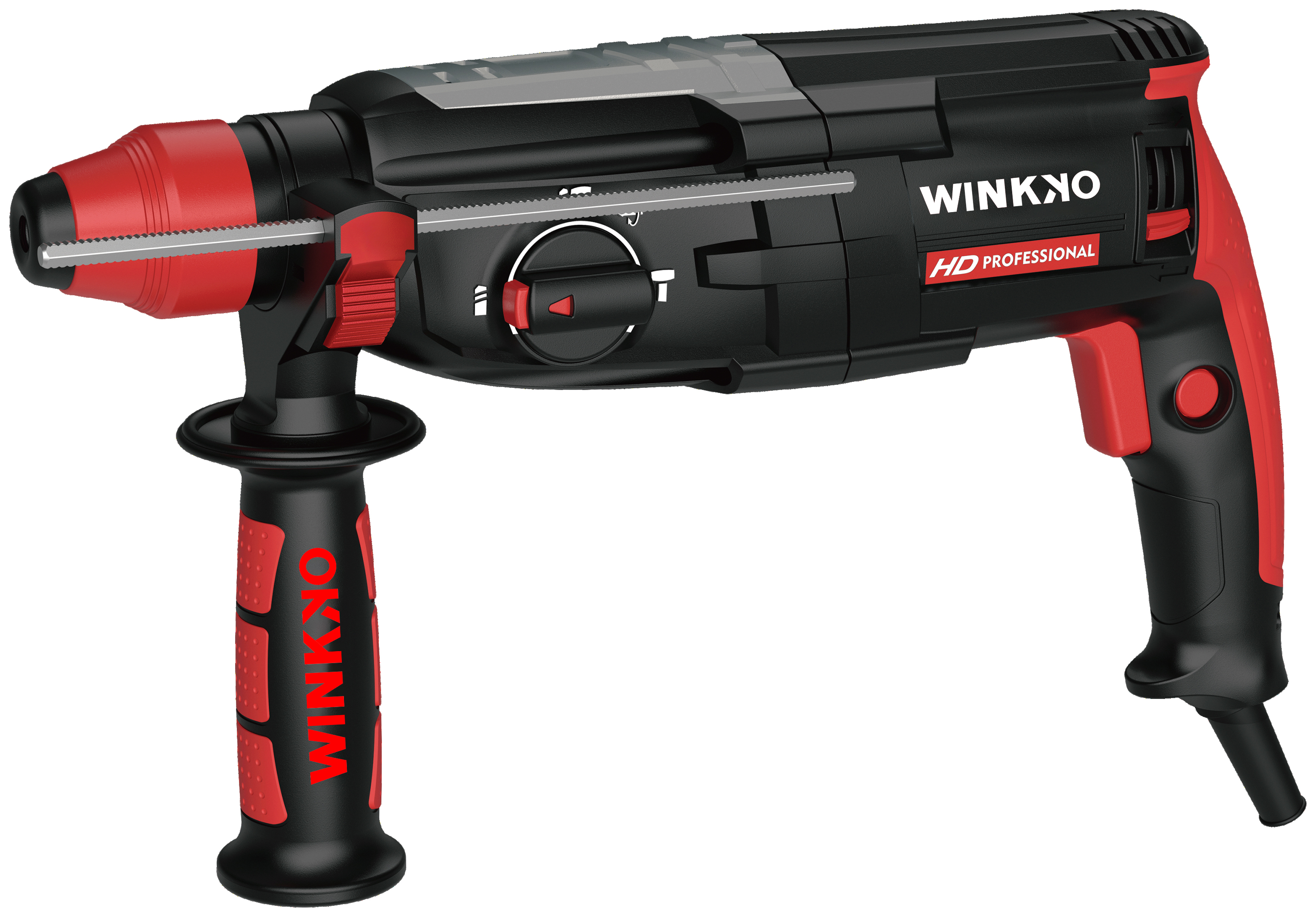
Selecting the right power tool for masonry or concrete work often feels like a balancing act between power and precision. Whether you are an industrial contractor or a specialized B2B distributor, understanding the technical nuances between a standard hammer drill and a heavy-duty rotary hammer is the difference between a clean installation and a damaged workpiece.
The decision to "hammer or not to hammer" depends entirely on your base material and the diameter of the hole required. For light masonry and small fixings, a hammer drill is sufficient; however, for heavy-duty concrete drilling, chiseling, and large-scale industrial applications, a rotary hammer is the necessary professional choice to ensure efficiency and tool longevity.
In this comprehensive guide, we will break down the mechanical differences, operational advantages, and specific application scenarios for these tools. We will explore the internal piston mechanisms of the rotary hammer, the percussion plates of the hammer drill, and how to choose the right equipment for your specific B2B industrial needs.
Table of Contents
About hammer drills
How a hammer drill works
Why the impact action of a hammer drill is important
When to use a hammer drill
When not to use a hammer drill
What applications are hammer drills best suited to?
What you'll need to get started using a hammer drill
About hammer drills
A hammer drill is a versatile dual-mode power tool designed to provide a rapid pulsing action that allows it to bore through brittle materials like brick and stone while maintaining the form factor of a standard driver.
Technically speaking, the hammer drill serves as the middle ground between a traditional drill/driver and a high-impact rotary hammer. It is engineered for users who require the flexibility to switch between standard rotation for wood or metal and a hammering function for masonry. This dual-functionality makes it a staple in the inventory of general contractors and maintenance professionals.
In a B2B procurement context, these tools are valued for their portability and cost-effectiveness. While a rotary hammer provides more joules of impact energy, the standard hammer drill offers higher Revolutions Per Minute (RPM), which is often more effective for creating clean holes in softer masonry or when using smaller bit diameters.
Furthermore, most modern industrial-grade models feature adjustable clutches and variable speed triggers. This allows the operator to fine-tune the torque, preventing the over-tightening of fasteners or the cracking of delicate ceramic surfaces. When compared to the massive force of a rotary hammer, the precision of this tool is its primary selling point.
How a hammer drill works
The mechanical operation of a hammer drill relies on two ribbed pressure plates that click in and out against each other, creating a high-frequency vibration that chips away at the material as the bit rotates.
Unlike the pneumatic system found in a rotary hammer, the standard hammer drill uses a mechanical "ratchet-style" mechanism. As the motor turns the drill bit, the internal plates ride over one another. This causes the chuck to move forward and backward rapidly. The "hammering" is essentially a series of thousands of small "Blows Per Minute" (BPM) that pulverize the substrate directly in front of the masonry bit.
Because this mechanism depends on the plates physically rubbing against each other, it requires the operator to apply significant manual pressure to the back of the tool. This is a key differentiator from the rotary hammer, which uses a piston and air cushion to generate force, requiring very little physical effort from the user.
From a technical maintenance perspective, the friction-based nature of this design means that the hammer drill generates more heat during prolonged use. This is why these tools are generally rated for "intermittent" masonry work rather than continuous heavy-duty concrete boring. Understanding this mechanical limit is vital for B2B buyers who need to ensure their fleet of tools can handle the projected workload without premature motor failure.
Why the impact action of a hammer drill is important
The impact action is critical because it overcomes the compressive strength of masonry materials, allowing the carbide-tipped bit to fracture the surface so the flutes can then remove the dust.
Standard rotation alone is often ineffective against brick or stone because the material is too hard for a cutting edge to "bite" into. The impact action of a hammer drill or rotary hammer acts like a miniature jackhammer. By constantly striking the material, the tool creates micro-fractures. Without this percussion, a drill bit would simply spin in place, generating extreme heat and ruining the tempered tip of the masonry bit.
In B2B industrial environments, time is a significant cost factor. The impact action increases drilling speed by up to 300% compared to non-impact drilling in stone. This efficiency ensures that technicians can complete installations of anchors, conduits, and brackets within tight project timelines.
| Feature | Hammer Drill Action | Rotary Hammer Action |
| Mechanism | Ratchet/Pressure Plates | Piston/Pneumatic |
| Force Source | User Pressure | Internal Air Pressure |
| Impact Energy | Low (measured in BPM) | High (measured in Joules) |
| Primary Goal | Precision/Light Masonry | Power/Heavy Concrete |
When to use a hammer drill
You should use a hammer drill when your project involves drilling holes up to 1/2 inch in diameter into materials such as brick, mortar, or light cinder blocks.
For most B2B commercial interior fit-outs, a hammer drill is the preferred choice for mounting electrical boxes, installing signage, or securing shelving to brick walls. Its compact size allows it to fit into tight spaces where a bulky rotary hammer would be unwieldy. It provides the necessary impact to penetrate the outer layer of a building without the risk of "blowing out" the back of the masonry unit.
Additionally, this tool is the correct choice when you need a multi-purpose device. Because the hammer function can be toggled off, it serves as a high-torque screwdriver and a standard wood drill. For a mobile service technician, carrying one tool that performs three functions is more efficient than carrying separate specialized units.
Furthermore, if the material is old or potentially brittle, the lower impact energy of this tool is actually an advantage. It allows for a more controlled entry, reducing the likelihood of shattering the surrounding substrate. It is the "surgical" option in the world of impact tools, whereas the rotary hammer is the "demolition" option.
When not to use a hammer drill
A hammer drill should not be used for drilling large holes in poured reinforced concrete, or for any task requiring the tool to operate as a dedicated chisel or breaker.
When the job requires boring through high-PSI reinforced concrete, the mechanical plates of a standard drill will eventually fail or overheat. This is where a rotary hammer becomes mandatory. Poured concrete often contains aggregate and rebar; a standard tool will bounce off the aggregate, whereas the pneumatic force of a rotary hammer will drive through it with ease.
Avoid using the hammer setting on materials like wood, metal, or plastic. The percussive force will cause the bit to wander, creating an oversized, messy hole and potentially snapping the drill bit. Similarly, do not use a hammer drill for core drilling larger than 1 inch. The lack of a safety clutch in many basic models can lead to high-torque "kickback" if the bit catches, which poses a safety risk to the operator.
Finally, if the project involves removing old tiles or breaking up a small slab, a hammer drill is the wrong tool because it lacks a "hammer-only" mode. Attempting to use a rotating bit for prying or chiseling will destroy the chuck and the internal motor housing. For these tasks, the SDS-plus or SDS-max chuck system of a rotary hammer is required.
What applications are hammer drills best suited to?
The primary applications for these tools include installing masonry anchors, electrical conduit mounting, and light-duty renovation work on residential or light-commercial brick structures.
In the B2B sector, specialized contractors often utilize these tools for HVAC installations where small-diameter holes are needed for refrigerant lines through exterior brick. They are also widely used in the security industry for mounting cameras and sensors to stone facades. The high RPM allows for very clean holes, which is aesthetically important for finished commercial spaces.
Fastener Installation: Ideal for Tapcon screws and sleeve anchors in brick.
Cabinetry: Mounting brackets to masonry walls in commercial kitchens.
Electrical: Securing junction boxes and metal-clad cables.
Plumbing: Drilling pilot holes for pipe hangers in basement walls.
While the rotary hammer dominates the heavy construction site, the versatility of the standard impact tool makes it the king of the "finishing trades." Its ability to transition from drilling a pilot hole in a steel stud to hammering through a brick veneer makes it an indispensable asset for the modern professional.
What you'll need to get started using a hammer drill
To begin, you will need the power tool itself, a set of high-quality carbide-tipped masonry bits, personal protective equipment (PPE), and a clear understanding of the depth requirements for your fasteners.
Selection of the bit is just as important as the tool. Using a standard HSS bit in a rotary hammer or hammer drill will result in the bit melting instantly. You must ensure the bit is rated for impact and matches the chuck type—either a standard keyed/keyless chuck for hammer drills or an SDS-plus/SDS-max shank for a rotary hammer.
Essential Equipment Checklist
The Tool: A brushless rotary hammer or hammer drill with at least two speed settings.
Masonry Bits: Carbide-tipped bits with flutes designed for dust extraction.
Safety Gear: ANSI-rated safety glasses, hearing protection, and a dust mask (N95 or better to prevent silica inhalation).
Depth Gauge: Often included with the tool to ensure consistent hole depth for anchors.
Vacuum/Blower: To remove dust from the hole before inserting an anchor, ensuring maximum grip.
Maintenance Tips for B2B Users
To ensure your investment lasts, always clean the dust out of the chuck after every use. For a rotary hammer, it is essential to apply a small amount of grease to the SDS bit shanks to prevent friction-welding within the chuck. Following a strict maintenance schedule will reduce downtime and extend the lifecycle of your industrial tool fleet.
Summary
The choice between a hammer drill and a rotary hammer is defined by the scale of the task. For B2B applications involving precision and light masonry, the hammer drill is a versatile and efficient choice. For high-volume concrete drilling and heavy demolition, the rotary hammer is the industrial standard. By matching the tool's mechanical action to the substrate's properties, you ensure both professional results and tool durability.


