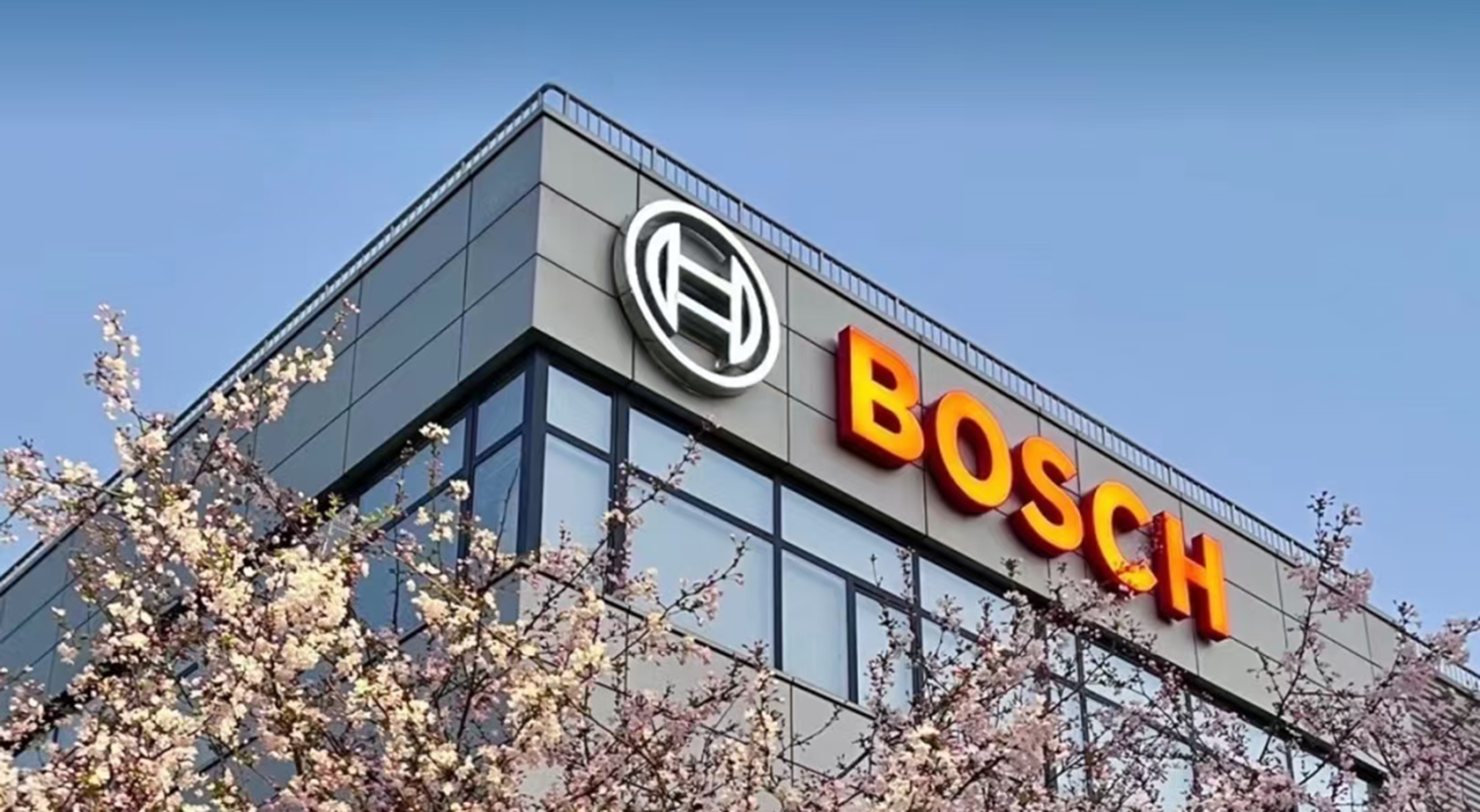
An Immersive Factory Visit – Unveiling Bosch Hangzhou Power Tools Factory
What happens when the "hardcore genes" of German lean production meet the dynamic drive of China's smart manufacturing?
Recently, more than 30 next-generation entrepreneurs transformed into "smart manufacturing explorers," visiting the Bosch Hangzhou Power Tools Factory — a benchmark for intelligent manufacturing that continues to lead the industry.
From a culture of continuous improvement driven by employee engagement, to flexible and efficient delivery strategies; from motor automation lines that can "think," to low-cost automated assembly lines enhanced with AI — an immersive journey into the world of smart manufacturing has begun.
1. Exploring Smart Manufacturing — Beginning with Data
The Bosch Power Tools Hangzhou Factory kicked off the visit by presenting a few impressive figures:
·50% automation efficiency
·80% equipment connectivity rate
·100% MES coverage across production lines
As one of Bosch's three global manufacturing hubs and two R&D centers for power tools and accessories, the Hangzhou factory focuses on research, innovation, and continuous improvement — advancing products developed and made in China to the global market.
Over the past 30 years in Hangzhou, the factory has earned the titles of Zhejiang Provincial Intelligent Factory and Leading Industrial Enterprise for five consecutive years. With 42 core technologies and over 200 invention patents, it continues to set "Bosch standards" for the entire industry.
2. Inside the Workshop: Decoding Smart Manufacturing
Led by the factory's Digitalization Manager and Lean Production System Manager, participants explored the shop floor and witnessed intelligent manufacturing in action.
(1) Achieving High Efficiency with Low-Cost Automation
The AI-based visual inspection system, developed in-house, precisely identifies product defects through machine learning an
d intelligent algorithms — greatly improving yield rates with minimal investment.
Meanwhile, the factory's self-designed Smart Feeder systems adapt to different process requirements, supported by deep industrial engineering expertise that ensures accurate and rapid material delivery.
(2) Balancing Rigidity and Flexibility in Production
To meet an increasingly dynamic market, the factory has built an end-to-end flexible response system covering material supply, manufacturing, and customer delivery. Through efficient cross-departmental collaboration, it continuously achieves the win-win goal of high delivery performance with low cost, significantly enhancing customer satisfaction.
(3) From Manual Lines to Intelligent Motor Production
As product technology evolved from traditional brushed motors to patented high-performance 18V brushless motors, production lines have also upgraded to fully automated Industry 4.0 systems.
Each motor now carries its own digital ID, with production parameters uploaded in real time to the MES system. The system automatically collects cycle data, identifies bottlenecks, and supports efficiency optimization. Any quality issue can be traced back to the exact process step with just one click.
3. Strategy Session: Implementing Digital Transformation
The visit concluded with an insightful sharing session by the Head of Consulting from the Bosch Connected Industry Division, focusing on the theme of Lean Digital Transformation.
From strategic planning to practical implementation — illustrated with real-life case studies — the session offered clear and actionable insights.
The lively Q&A sparked enthusiastic discussions, drawing rounds of applause and genuine engagement from all participants.
Conclusion
This immersive experience not only showcased Bosch Hangzhou's leadership in digital transformation and lean production but also inspired a new generation of entrepreneurs to rethink the future of smart manufacturing — where German precision meets Chinese innovation.